
A kit is a deceptively simple thing. To the person opening it, it’s one product, a welcome pack, a sample box, a test kit, a subscription delivery.
Behind the scenes, it’s five, ten or twenty separate components that all had to arrive, be checked, and come together in exactly the right combination, thousands of times over, without a single one going astray.
That coming-together is kit assembly, and it’s one of the most detail-hungry jobs in fulfilment. Here’s what kit assembly services actually involve, why the work is harder than it looks, and how to know when it’s time to hand your kit builds to a specialist.
What are kit assembly services?
Kit assembly, often called kitting or kit collation, is the process of gathering multiple individual components and combining them into a single finished kit, ready for despatch or distribution.
A professional service manages the whole journey: receiving and storing components, collating them to a documented specification, assembling and packing each kit, checking quality throughout, and despatching the finished goods.
The value lies in turning many moving parts into one dependable output. You send components; complete, consistent kits come out the other end.
The many kinds of kit
Once you start looking, kits are everywhere. Marketing teams build press kits, event packs and product launch boxes. HR departments send welcome kits to new starters. Sales teams post sample kits to prospects.
Subscription businesses assemble recurring boxes month after month. Training providers collate course materials into delegate packs.
And at the most demanding end of the spectrum sit medical and diagnostic kit assembly, where every component must be traced by lot number and expiry date because the finished kit will be used for a genuine medical purpose. The principles are the same across all of them; only the stakes change.
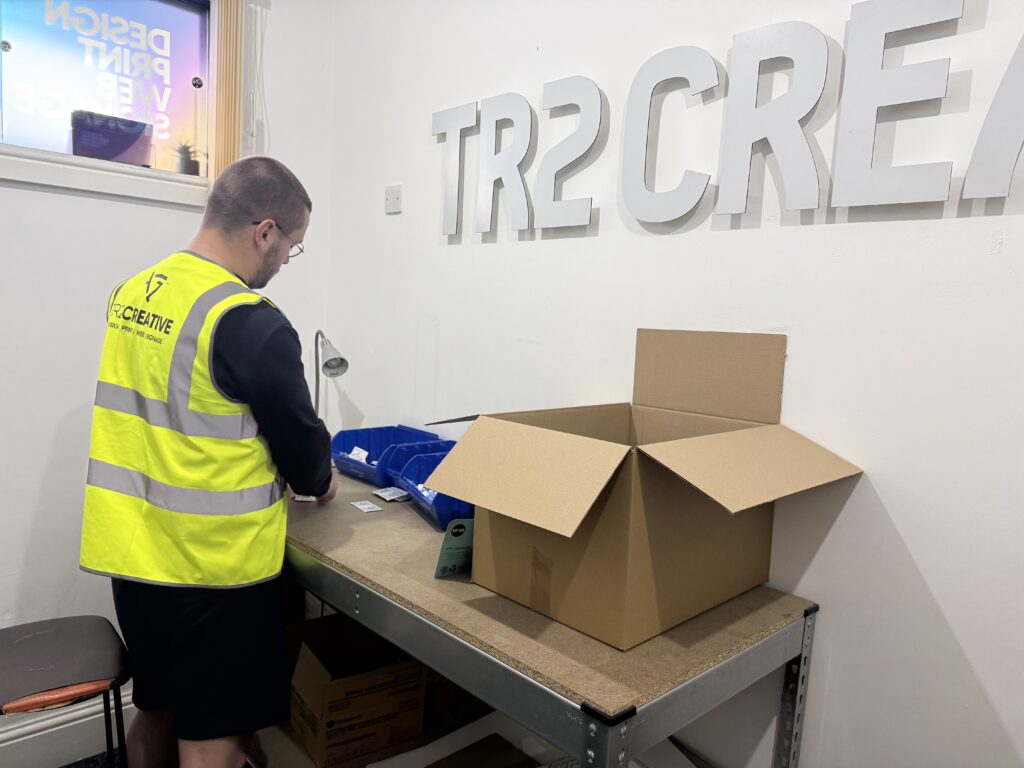
Why kit assembly is harder than it looks
The difficulty isn’t any single kit; it’s the ten-thousandth one. Assembling one perfect kit takes care. Assembling thousands to an identical standard takes process and that’s the difference between amateur and professional kitting.
Consider what has to go right every single time: the correct version of every component (leaflets get updated, packaging changes), the correct quantity of each item, the correct placement so the kit opens well and travels safely, and a running reconciliation so component stock and finished kit counts always agree.
One person on a table can hold all that in their head. A team at volume needs it written down, trained in and checked.
Versioning deserves special mention, because it’s the silent killer of kit accuracy. Components evolve, a leaflet gets a legal update, a box design refreshes, an instruction sheet is revised and old and new versions often sit in stock side by side.
Without a controlled process for retiring superseded components, yesterday’s leaflet has a way of turning up in today’s kits. Professional operations manage this deliberately, so every kit that ships reflects the current, approved specification.
Quality control: the invisible ingredient
Good kit assembly operations are quietly obsessed with checking. Components are inspected on arrival, not discovered faulty mid-build. Assembly follows a specification everyone can see, with checks staged through the run rather than a hopeful glance at the end.
Completed kits are sampled, counts reconciled, and anything questionable pulled out before it ships.
None of this is visible in the finished kit, which is exactly the point. The recipient just experiences a product that’s complete and right. Quality control is the ingredient you only notice when it’s missing.
The payoff compounds over time, too. Every issue caught and corrected feeds back into the specification, so recurring kit programmes don’t just maintain their standard, they steadily raise it. That’s the quiet advantage of working with a team that builds the same kits week after week.
Scale, seasonality and staying sane
Kit requirements rarely arrive in tidy, even quantities. Launches spike, campaigns cluster, and seasonal peaks demand ten times the output of a quiet month. Building an in-house team for the peak means paying for it in the trough; building for the trough means drowning at the peak.
A kit assembly and collation service absorbs that variability for you. Because a fulfilment house runs many programmes side by side, it can flex people and space onto your work when you need volume, a rhythm that suits ongoing, recurring kit programmes especially well.
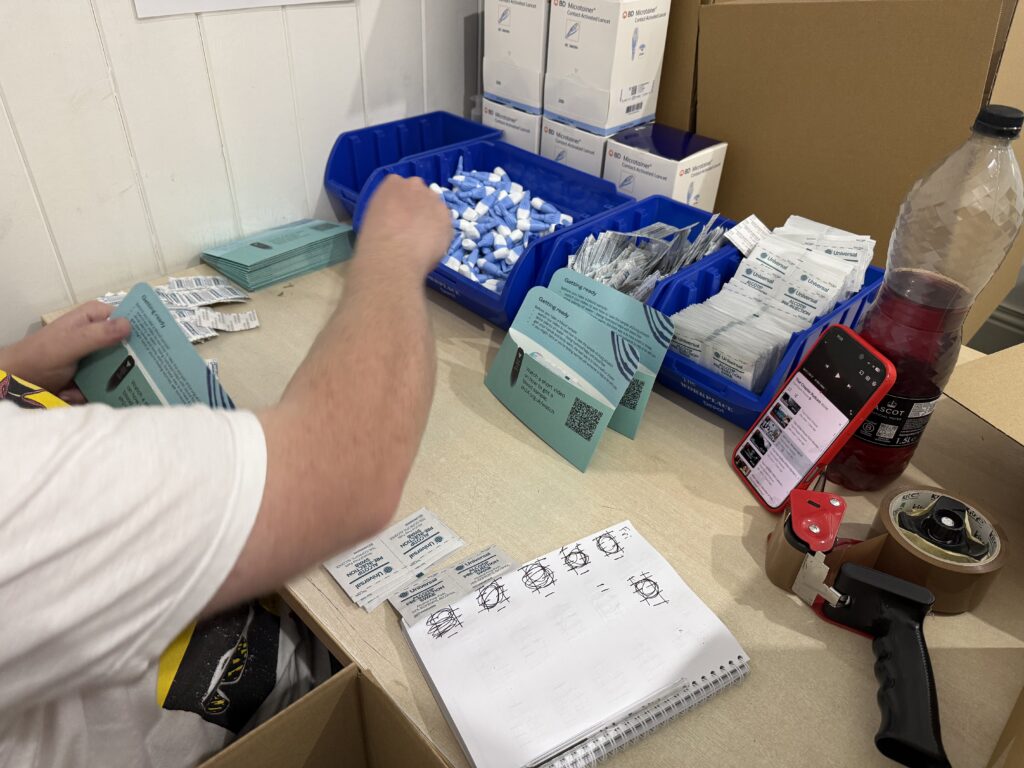
What a good kit assembly process looks like
If you’re evaluating a partner, the shape of a good engagement is fairly consistent. It starts with a detailed specification and a sample build you sign off before full production begins.
Components are booked in and stored properly, assembly runs to the agreed spec with quality checks throughout, and you get reporting on output and stock so you’re never guessing. Then, because most kit programmes recur, the process repeats, a little smoother every time.
A partner who walks you through that process unprompted is a partner who has done it many times before. That experience is what you’re really buying.
Kit assembly with TR2 Creative
Kit assembly is at the core of what we do at TR2 Creative. From our Stoke-on-Trent facility, we collate and assemble kits at volume for clients across the UK, from marketing and campaign packs through to medical and diagnostic kits built under full traceability, alongside our product assembly and contract packing services.
If you’ve got a kit programme in the pipeline, or an existing one that’s outgrown its current home, take a look at our kit collation and packing services or contact the team and tell us what’s in the box.