
Business signage plays an important role in how customers discover, interpret and interact with a brand. A well-designed business sign does more than display a logo or company name. It communicates the brand’s identity, presents information clearly, and attracts the attention of potential customers passing by a shop or store location.
Businesses today use a wide range of signage, including custom signs, metal signs, vinyl banners and promotional signs, to increase visibility and strengthen their presence in busy retail environments.
Understanding how signage influences behaviour helps businesses create signs that guide customers and improve the overall customer experience. Research shows that nearly 76% of consumers enter a store they have never visited before simply because the business signage attracted their attention, proving that effective signage plays an essential role in generating foot traffic and supporting sales.
The psychology of signage and customer perception
Signage design works because of visual psychology. Customers process visual cues extremely quickly and often form an impression of a business within seconds of seeing a sign. Elements such as colour, fonts, placement and clarity influence how people interpret information and respond to a brand.
High-quality custom signage can convey professionalism and instil trust. When signs are produced with high-quality materials such as aluminium, vinyl graphics, or durable metal, they signal reliability and attention to detail. Poorly maintained signage can have the opposite effect. Studies suggest that up to 50% of potential customers may avoid entering a business if the signage appears poorly maintained or unclear.
Signs also help communicate personality and identity. A carefully designed sign that includes a clear logo, readable fonts, and consistent branding communicates the business’s ideas before customers even step inside. These immediate impressions, often called thin-slice judgements, shape how customers perceive a brand almost instantly.

Colour psychology and visual hierarchy in signage
Colour theory plays an important role in signage design because colour can influence how people feel and respond to visual information. Certain colours attract attention more effectively, while others create a sense of trust or professionalism. Businesses often use colour strategically to guide attention and highlight key information such as promotions or store entrances.
Visual hierarchy also determines how quickly customers process information. Signs that use larger headings, clear spacing and easy-to-read fonts allow customers to understand the message instantly. Crowded designs can overwhelm the brain and reduce comprehension, which is why effective signage often leaves around 30–40% of the sign surface free of text or graphics.
High contrast colour combinations further improve readability. Dark text on a light background or bright lettering on darker surfaces helps customers read signs quickly, even from a distance. These visual principles ensure that signage communicates information clearly while supporting brand visibility.
Types of business signage and their impact
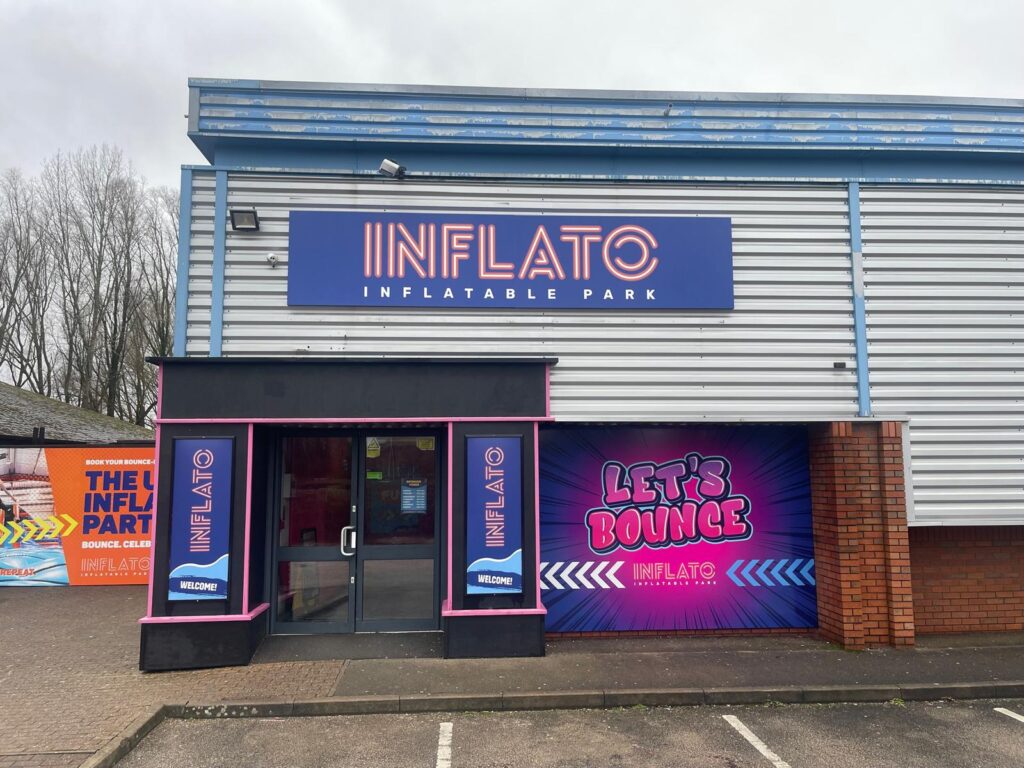
Businesses rely on several types of signage to communicate with customers at different stages of the customer journey. Exterior business signage helps attract attention and build brand recognition from outside the premises. These signs often include illuminated shop signs, metal signs or large branded panels designed to improve visibility from the street.
Interior signage serves a different purpose by guiding customers through the environment. Directional signs help visitors locate departments, checkout areas, or service counters, while informational signs communicate product details or promotional messages.
Promotional signage, such as vinyl banners or temporary signs, can also be used during events, trade shows, or seasonal campaigns. These signs allow businesses to communicate offers quickly and capture customer attention in busy retail spaces.
How signage increases foot traffic and sales
Effective signage has a measurable influence on customer behaviour. Clear and attractive signs increase the likelihood that people will notice a business and decide to enter. Research indicates that approximately 17% of customers stop at a business specifically because they noticed its sign, highlighting the importance of strong visual communication.
Businesses that update or improve their signage often experience higher engagement. Studies suggest that more than 60% of businesses that upgrade their signage report increased foot traffic and sales, demonstrating the direct impact signage can have on performance.
Digital signage can also influence purchasing decisions. Interactive or digital displays have been shown to increase impulse purchases and may boost sales by up to 33% by highlighting promotions or new products.
Custom signage materials and design choices
Custom signage can be produced using a wide variety of materials depending on the environment and design requirements. Businesses frequently choose materials such as vinyl, rigid plastic, plywood, cardboard and metal to create signs suited to specific applications.
Vinyl banners are commonly used for short-term promotions or event displays because they are flexible and cost-effective. Aluminium or metal signs are more durable and better suited to long-term outdoor signage that requires weather resistance.
Custom signage can also be tailored for different industries, including retail, healthcare and education. Retail stores often prioritise promotional displays and branding elements, while healthcare environments rely on clear directional signs to guide visitors efficiently. Selecting the right material and design ensures that signage communicates clearly while maintaining long-term durability.
Signage placement and visibility
The placement of signage plays a major role in how effectively it communicates with customers. Signs positioned at eye level or near entrances naturally attract more attention because they appear within a customer’s direct line of sight. Businesses located on busy roads often rely on larger signs to ensure drivers can read information quickly.
Pedestrian-focused signage is equally important. Blade signs and A-frame sidewalk signs can attract people walking past a shop, encouraging them to stop and explore. These portable signs are particularly useful for promotions or special offers, as they can be strategically positioned to increase foot traffic.
Ready to Make Your Business Stand Out?
If you want signage that attracts attention, strengthens your brand and brings more customers through your door, our team can help. TR2 Creative designs and produces high-quality business signs tailored to your brand and location. Contact us today to discuss your signage project and find the right solution for your business.
Speak to our team today and start creating signage that works for your business.
Frequently Asked Questions
Why is business signage important?
Business signage improves visibility, communicates brand identity and attracts customers to a shop or store. Effective signs help businesses stand out in busy locations and influence customer behaviour.
What types of signage attract customers most effectively?
Outdoor signs, promotional banners and directional signs are highly effective because they capture attention and guide customers toward the business location.
How can signage improve customer experience?
Clear signage helps customers navigate spaces, find products and understand promotions. When customers can easily find information, their overall experience improves and they are more likely to return.