
There is something quietly powerful about a well-made piece of mail landing on a doormat. In a world where inboxes overflow and digital adverts are scrolled past in a heartbeat, a physical mailing gets held, opened and read.
But between the great idea and the letterbox sits a surprising amount of work and that work is called direct mail fulfilment.
In this guide, we’ll walk through what direct mail fulfilment actually involves, why it still earns its place in modern marketing, and how to decide whether to run your next campaign in-house or hand it to a specialist.
Why direct mail still delivers
It’s tempting to assume print mail belongs to another era, but the opposite is true. Precisely because our screens are so crowded, physical mail stands out. A printed mailing is tangible: it sits on the kitchen table, gets pinned to the fridge, and often reaches decision-makers that email filters never let through.
Direct mail also works beautifully alongside digital campaigns rather than against them. A postcard that lands the same week as an email sequence reinforces the message twice over, and a personalised letter can nudge a warm prospect over the line in a way a banner ad rarely will. For membership organisations, charities, retailers and B2B brands alike, print remains one of the most reliable ways to be genuinely noticed.
There’s a trust factor at play too. A printed piece signals effort and permanence in a way a marketing email never can — someone designed it, printed it and paid to post it. Recipients sense that, and it changes how the message is received before a single word has been read.
What does direct mail fulfilment actually involve?
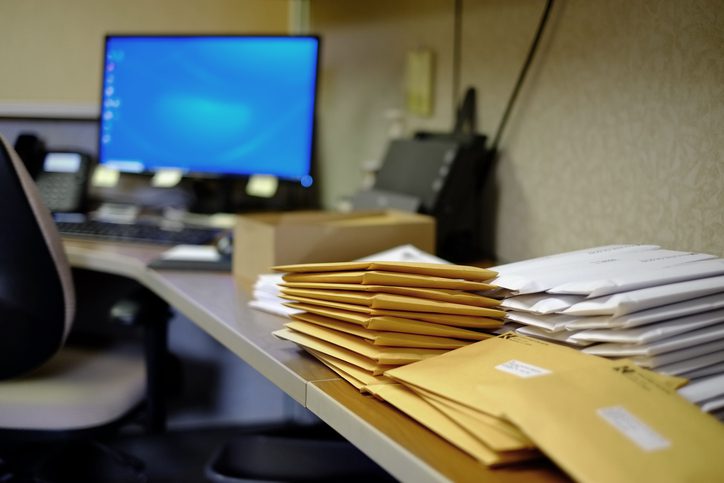
Fulfilment is everything that happens between the finished artwork and the postbox. That typically includes printing the mailing pieces, managing the recipient data, personalising and addressing each item, folding and inserting the contents into envelopes, sorting the finished mailing to postal requirements, and lodging it with the carrier on schedule.
Each of those steps sounds simple in isolation.
Done at volume, hundreds or thousands of items, every week or every month, they become a production process that needs planning, capacity and quality control. A mis-timed lodgement, a mismatched address, or an envelope that creeps over a postage weight band can quietly undo the economics of an otherwise brilliant campaign.
Getting the postage right (and why grams matter)
Here’s the part that catches many businesses out: postage is usually the single biggest cost in a direct mail campaign, and it’s governed by size and weight bands. A pack that weighs just a few grams over the threshold can tip an entire mailing into a higher rate, multiplied across thousands of items; that’s a serious dent in the budget.
Good fulfilment teams design around this from the start.
Paper stocks, page counts, envelope choices and inserts are all weighed and specified so the finished pack sits comfortably within the target format. It’s unglamorous detail work, but it’s exactly where an experienced direct mail fulfilment partner pays for itself.
Data, personalisation and accuracy
The other half of a successful mailing is the data behind it. Every recipient record needs to be current, correctly formatted and matched to the right pack.
Personalisation makes mail dramatically more effective, a named letter always beats “Dear Homeowner”, but it raises the stakes on accuracy, because the wrong contents in the wrong envelope is worse than no mailing at all.
That’s why professional fulfilment operations build checks into every stage: data is validated before printing, packs are verified during insertion, and counts are reconciled before despatch. When mailings recur monthly, that discipline compounds, the process gets tighter, faster and more predictable with every run.
In-house or outsourced?
Plenty of organisations start by fulfilling mailings themselves, and for a small, occasional run that can work. The trouble starts when volumes grow. Suddenly half the office is folding letters, deadlines slip, postage costs creep, and the people hired to do skilled work are stuffing envelopes instead.
Outsourcing makes sense when the mailing is high-volume, recurring, or both.
A fulfilment partner brings dedicated capacity, established postal relationships, and a process refined across hundreds of campaigns, so your team gets its time back and your mailing lands on schedule, every time.

What to look for in a fulfilment partner
A few questions are worth asking before you commit. Can they handle your volumes at the frequency you need? Do they understand postage formats and design packs to hit them? Will they manage your data securely and accurately? And can they take on the whole job, design, print and fulfilment, rather than adding another handoff to your supply chain?
That last point matters more than it first appears. When one supplier prints the pieces and another fulfils them, delays and errors have a habit of falling into the gap between the two. A single partner with a single point of accountability removes that risk entirely.
Direct mail fulfilment with TR2 Creative
At TR2 Creative, direct mail is part of what we do every single month. From our Stoke-on-Trent facility, we design, print and fulfil recurring mailings for clients across the UK, handling everything from envelope stuffing and addressing through to postal lodgement.
You can see how that works in practice in our Artstat case study, where a monthly brochure mailing is produced, packed and posted to a tightly managed weight specification.
If you’re planning a high-volume campaign or looking to hand over a recurring mailing for good, explore our direct mail fulfilment services or get in touch with the team. We’d love to hear about your next campaign.