
Most fulfilment work carries a simple consequence when it goes wrong: an unhappy customer, a redelivery, an apology. Healthcare fulfilment is different. When the item being assembled is a diagnostic test kit or a clinical trial pack, accuracy isn’t a nice-to-have; it directly affects patient care, test results and clinical outcomes.
That’s what makes healthcare fulfilment one of the most demanding corners of the industry, and one of the most rewarding to get right. In this article, we’ll unpack what the term covers, what separates it from standard fulfilment, and what to look for in a partner you can trust with it.
What is healthcare fulfilment?
Healthcare fulfilment is the assembly, packing and despatch of health-related products and materials on behalf of healthcare providers, diagnostics companies, research organisations and health-tech businesses.
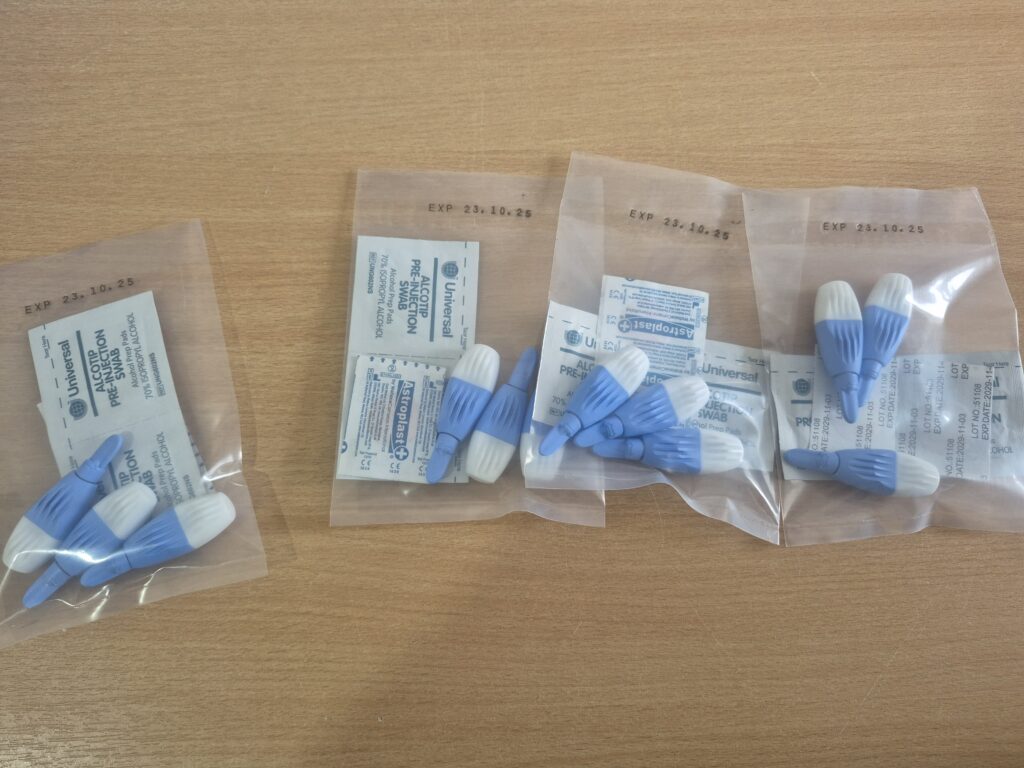
Typical work includes assembling home testing kits, collating clinical trial packs, packing patient information mailings, and preparing sample collection kits for distribution.
The sector has grown enormously as healthcare has moved closer to the patient. Home diagnostic testing, remote monitoring and postal sample collection all depend on kits that arrive complete, correct and in perfect condition and someone has to assemble every single one of them.
What makes it different from standard fulfilment?
Three things, chiefly: traceability, control and consequence.
Traceability means every component in a kit can be accounted for, which batch it came from, when it expires, and which finished kits it went into. Lot numbers and expiry dates aren’t administrative decoration; if a component is ever recalled, traceability is what allows affected kits to be identified quickly and precisely.
Control means the assembly process itself is documented, repeatable and checked. Every kit must contain exactly the right components in the right condition, because the person opening it may be relying on it for a medical result.
And consequence is the reason the first two exist: in healthcare, a missing swab or an expired reagent isn’t a customer service ticket, it’s a failed test and a let-down patient.
Where healthcare fulfilment is used
The most visible example is diagnostic test kit assembly, the home testing kits used for sexual health screening, blood sampling, health monitoring and more.
Each kit typically combines several components: collection devices, instructions, return packaging and labelling, all of which must be present and correct.
Alongside that sits clinical trial pack assembly, where research organisations need trial materials collated consistently across every participant pack, plus broader work such as patient mailings, practitioner sample packs and health campaign distribution.
Data protection and patient confidentiality
There’s a second dimension to healthcare fulfilment that has nothing to do with the physical kit: the data. Patient names, addresses and order details are sensitive by definition, and any mailing or kit despatch that uses them must handle that information securely, restricted access, careful data transfer, and destruction of records once they’re no longer needed.
Discretion extends to the packaging itself. Many health-related kits are deliberately despatched in plain, unbranded packaging so that nothing about the parcel reveals its contents to anyone but the recipient.
It’s a small detail with a big impact on whether people feel comfortable ordering a test to their home in the first place and thoughtful fulfilment partners treat it as standard practice, not an optional extra.
Scaling without losing control
Here’s the real test of a healthcare fulfilment operation: volume. Checking one kit carefully is easy. Maintaining that same rigour across thousands of kits a week, month after month, is where process either holds or breaks.
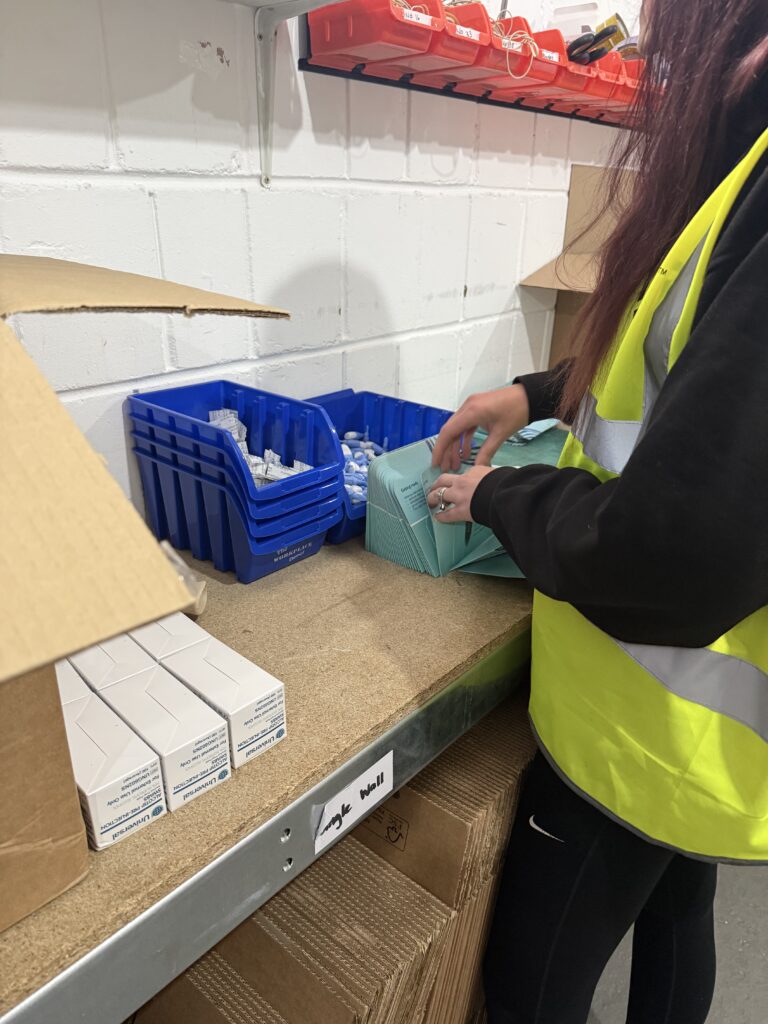
The best operations solve this with structure rather than heroics, clear assembly specifications, staged quality checks, reconciled counts, and teams trained on the specific kit builds they handle. Done well, the ten-thousandth kit is assembled to exactly the same standard as the first.
Stock management matters just as much at scale. Components with expiry dates must be rotated so that older stock is used first, incoming batches must be logged before they touch a production line, and finished kit counts must reconcile against component usage at the end of every run.
When those disciplines are embedded, volume becomes an asset rather than a risk, the process gets sharper with every batch, and the client gets a partner who can grow with them.
Questions to ask a healthcare fulfilment provider
If you’re evaluating partners, a few questions will tell you a great deal. How do they record lot numbers and expiry dates? What does their quality control process look like at each stage of assembly?
How do they manage stock rotation so older components are used first? What volumes can they sustain week in, week out? And can they show you comparable work they already deliver?
A provider who answers those questions confidently and specifically is one who has genuinely done the work. Vague reassurance is a warning sign in any industry; in this one, it should end the conversation.
Healthcare fulfilment with TR2 Creative
Healthcare and diagnostic work is a major part of the fulfilment operation at TR2 Creative. From our Stoke-on-Trent facility, we assemble medical and diagnostic kits at a significant volume.
Our SH:24 case study shows what that looks like in practice, with thousands of test kits assembled every week under full lot-number and expiry-date traceability, and more than a million packs completed since the partnership began.
If your organisation needs a fulfilment partner who treats every kit as if a patient is waiting for it, because one is, explore our healthcare fulfilment services or talk to the team about your requirement.